Guides · Kubernetes & Delivery · Terraform · IaC
OpenTofu vs Terraform: Should Your Startup Switch in 2026?
· 3 min read
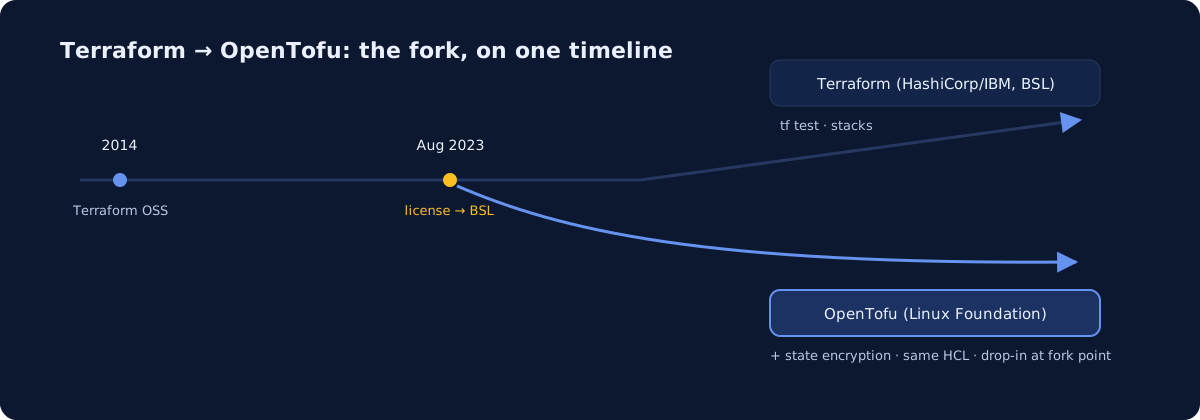
In August 2023 HashiCorp moved Terraform from open source to the Business Source License, and the community response — OpenTofu, a Linux Foundation fork — has since become one of the most-searched infrastructure decisions going: stay on Terraform, or switch? Here’s the startup-sized answer, without the ecosystem drama.
Does the BSL license actually affect a startup?
Almost certainly not. The BSL restricts using Terraform to build a competing product — a hosted IaC service. Using Terraform to manage your own infrastructure, commercially, at any scale, remains free and permitted. No startup running its own AWS/GCP/Azure estate is violating it. The license question is real for platform vendors; for you, it’s a values-and-risk question, not a legal one.
Is OpenTofu a drop-in replacement?
For code written against Terraform ~1.5 and earlier: yes, essentially. Same HCL, same providers (OpenTofu has its own registry mirroring the ecosystem), same state file format at the fork point, and tofu init && tofu plan on an existing codebase generally just works. The projects have since diverged in features — the flagship OpenTofu additions being native state encryption (encrypt state at rest without wrapping your backend in extra tooling) and provider iteration features — while Terraform ships its own post-1.6 features (like terraform test and stacks) that OpenTofu doesn’t mirror one-for-one. The further both move, the less “drop-in” the swap gets — which cuts both ways.
Reasons to switch
- State encryption. OpenTofu encrypts state client-side. Terraform state contains secrets in plaintext by default, and protecting it is all backend configuration. This is the single most concrete technical win.
- Governance. Linux Foundation stewardship means no future license surprise. Once bitten, twice shy is a rational position.
- Cost trajectory. If you were eyeing Terraform Cloud, the pricing cliff at scale is real; the OpenTofu ecosystem pairs naturally with independent backends and CI-driven workflows.
Reasons to stay
- It works and nothing is broken. The strongest argument in operations. Migration effort is low but not zero — CI images, wrapper scripts, module pins, muscle memory.
- Ecosystem gravity. Tutorials, Stack Overflow answers, provider docs, and hiring pools still say “Terraform” first.
- You use recent Terraform-only features. If your code leans on post-fork additions, the swap stops being drop-in.
What about Pulumi?
Different question. Pulumi is IaC in TypeScript/Python/Go — attractive when your team wants real loops, types, and testing around infrastructure. But it’s a rewrite, not a migration, and the startup default remains HCL: the module ecosystem and the pool of engineers who read it are unmatched. Switch paradigms because your team wants to, not because a blog told you to.
Our default recommendation
New builds: OpenTofu. State encryption plus foundation governance at zero compatibility cost is a free win when there’s no legacy to migrate. Existing Terraform estates: don’t rush. Migrate opportunistically — when you’re already touching CI or restructuring modules — not as a standalone project. The real risk in most startup IaC isn’t the logo on the binary; it’s unencrypted state in a public-ish bucket, hand-applied changes drifting from code, and modules nobody dares touch. Those are exactly what a $1,900 infra audit is guaranteed to find, and our Terraform page shows how we structure IaC either way — every engagement delivers plain HCL in your repos, so the OpenTofu/Terraform choice stays yours to make and remake.
Newsletter
One practical DevOps guide a week
Real numbers, honest trade-offs, no vendor fog — same as everything here. Unsubscribe anytime.