Guides · Hiring & Strategy · Hiring · Salaries · Costs
DevOps Engineer Salary in 2026 vs the Fractional Math
· 5 min read
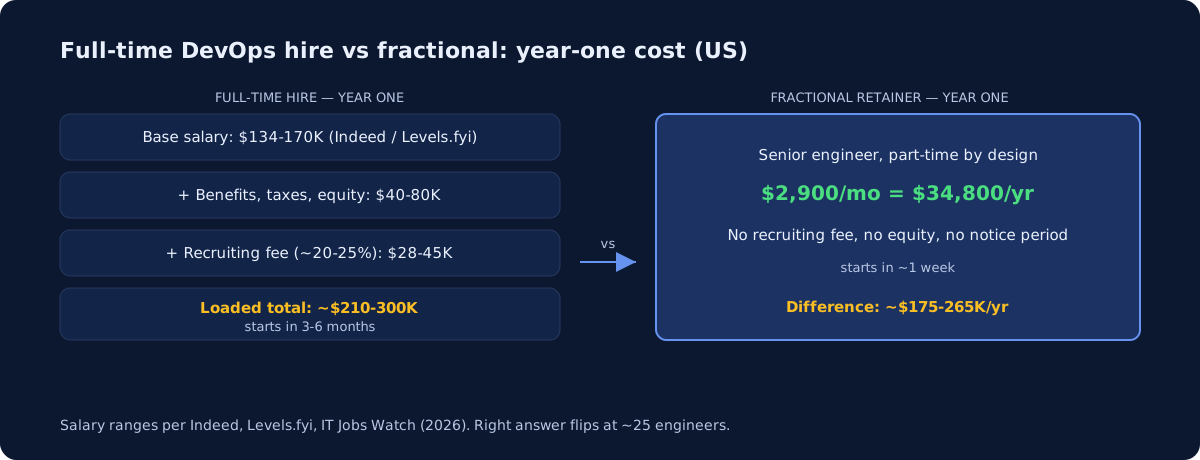
A mid-to-senior DevOps engineer in 2026 earns roughly $134,000–170,000 in the US (Indeed’s posting average sits at $133,662; Levels.fyi puts average total comp near $170,000), a £70,000 median in the UK per IT Jobs Watch, and roughly €65,000–80,000 in German tech hubs per Talent.com data. But salary is the smallest honest number in the hiring decision: fully loaded, a US hire runs $210,000–300,000 in year one. A fractional DevOps retainer delivers the same seniority for about $35,000 a year — which is why the real question isn’t “what does a DevOps engineer cost?” but “how many hours of one do you actually need?”
What does a DevOps engineer earn in 2026?
In the US, job-posting data and self-reported total comp tell two different but consistent stories: base salaries cluster in the $130–150K range, and total compensation at funded startups and larger tech companies lands $150–200K+ once equity and bonus are counted. Europe pays meaningfully less in cash, though loaded costs narrow the gap.
| Market | Typical range (2026) | Source (loosely) |
|---|---|---|
| US — posting average | $133,662 (range ~$86–207K) | Indeed, trailing 36 months |
| US — total comp average | ~$170,000 | Levels.fyi, DevOps-focused SWE |
| UK — median | £70,000 (IQR £57–90K; London £85K) | IT Jobs Watch, 6 months to Aug 2026 |
| Germany — experienced, major hubs | ~€65–80K (top earners to ~€125K) | Talent.com salary reports |
Two 2026 wrinkles worth noting. UK medians actually dipped slightly year-over-year while regional (non-London) salaries rose — the market is flattening geographically. And AI tooling hasn’t dented demand for senior infrastructure people; if anything it’s raised the bar for what one senior engineer is expected to own (we covered why in Will AI Replace DevOps Engineers?).
What does a full-time hire actually cost, fully loaded?
Take base salary and add 25–40% — the standard rule of thumb for payroll taxes, benefits, and overhead — then add a one-time contingency recruiting fee, typically 20–25% of first-year salary. On a $150K US base, that’s roughly:
- Base salary: $150K
- Payroll taxes, benefits, equipment, overhead: $40–60K
- Equity grant (real cost, often ignored): varies, commonly $20K+/year at funded startups
- Recruiting fee, one-time: $30–37K
- Year-one total: ~$240–270K, before the 3–6 months of search time in which nothing gets fixed
The UK and EU math is gentler in absolute terms but the multiplier is similar or higher — employer national insurance, pension contributions, and social charges push a £70K UK hire toward £90–100K loaded, and German social contributions do the same on top of a €75K base.
When is a full-time DevOps hire genuinely the right call?
At around 25+ engineers, or earlier if infrastructure is your product. At that scale there’s a real 40-hour week of platform work: someone needs to sit in sprint planning, own incident response end-to-end, and carry daily context no part-time engineer can. Other honest signals it’s time to hire:
- Your infrastructure request backlog is consistently full and turnaround time hurts weekly
- You’re running 24/7 on-call obligations that a retainer can’t contractually cover
- You’re building an internal platform team, not just keeping systems healthy
If you’re there, hire. The salary data above is your budget, and paying at or above the 75th percentile for a strong senior is usually cheaper than a mis-hire.
When does the fractional math win?
Below ~25 engineers, most startups have 20–60 hours a month of genuinely senior infrastructure work — CI/CD upkeep, cost reviews, a scaling fix, compliance evidence kept green — not 160. Paying $240K loaded for a part-time problem is one of the most common infrastructure overspends at this stage, often bigger than any single cloud bill line item. The fractional alternative:
- $2,900–5,600/month for Western senior-level fractional services — ours is $2,900 flat
- $34,800/year vs ~$240K loaded: a difference of roughly $175–265K — one to two additional product engineers
- Start in about a week instead of a 3–6 month search, with no recruiting fee and no severance risk
There’s also a retention angle the salary surveys don’t show: a strong senior DevOps engineer at a 10-person startup gets bored once the interesting problems are solved. When they leave at month 14, the recruiting fee and ramp-up costs repeat. A fractional arrangement doesn’t have that failure mode — the provider’s whole model is staying useful across many small environments on AWS, GCP, and Azure.
How do you compare offers fairly?
Compare loaded annual cost against your actual monthly workload, not salary against retainer price. A quick honest test: list last quarter’s infrastructure tasks and estimate senior-hours per month. Under ~60 hours, fractional wins on cost and usually on quality of attention per hour. Over ~120 sustained, start recruiting — and use a retainer to bridge the search rather than rushing the hire. We’ve published the full decision framework, break-even math included, in Fractional DevOps vs. a Full-Time Hire, and if you’re weighing agencies and freelancers too, see our comparison of the three models.
Bottom line: the 2026 salary market prices a senior DevOps engineer at $134–170K in the US and £70K median in the UK — but the number that should drive your decision is loaded cost per useful hour. Run your own figures in our DevOps cost calculator; if the math says hire full-time, we’ll tell you the same on a call.
ByteDel provides fractional DevOps for funded startups across AWS, GCP, and Azure — $2,900/month flat, published publicly. Salary figures above are market data cited in-text, not our measurements.
Newsletter
One practical DevOps guide a week
Real numbers, honest trade-offs, no vendor fog — same as everything here. Unsubscribe anytime.