Guides · Compliance & Certifications · soc2 · iso-27001
ISO 27001 vs SOC 2: Which Should Your Startup Get First?
· 5 min read
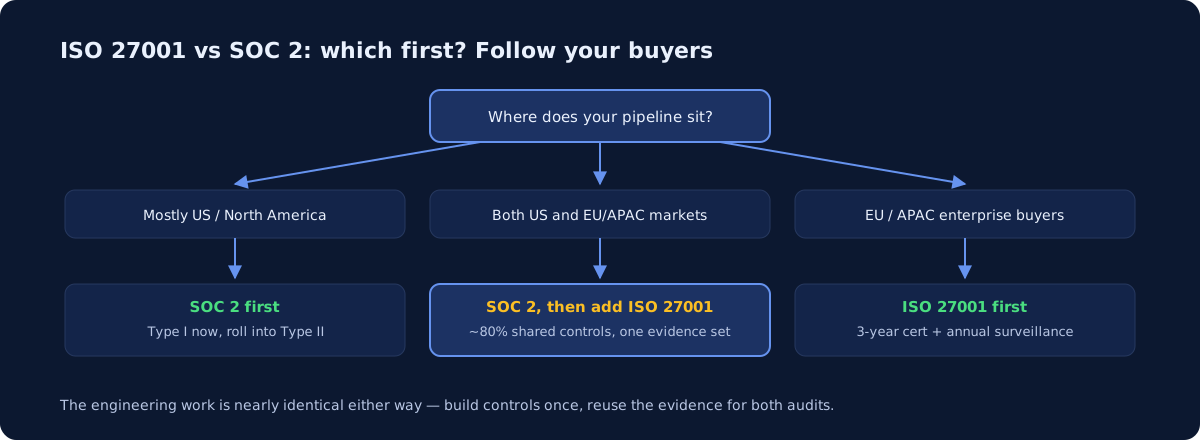
The short answer: follow your revenue. If your buyers are mostly US companies, get SOC 2 first — it is what American procurement and security teams ask for by name. If your pipeline is European or APAC enterprise, start with ISO 27001, the internationally recognized certification. And because the two frameworks overlap heavily — the AICPA’s own mapping puts it at roughly 80% — doing one makes the second dramatically cheaper, so “which first” matters more than “which one.”
What’s the actual difference between SOC 2 and ISO 27001?
SOC 2 is an attestation report written by a CPA firm against the AICPA’s Trust Services Criteria; ISO 27001 is a formal certification of your information security management system (ISMS) issued by an accredited certification body. SOC 2 describes your controls and how they performed; ISO 27001 certifies that you run a management system that continuously governs security.
That distinction shapes everything downstream. A SOC 2 report is a confidential document you share under NDA, and buyers read the auditor’s opinion and exceptions. An ISO 27001 certificate is a public, portable credential valid for three years, with annual surveillance audits in between. The 2022 revision of ISO 27001 consolidated Annex A into 93 controls; SOC 2 lets you scope which Trust Services Criteria you include beyond the mandatory Security criteria. On the infrastructure side, the day-to-day work — access control, logging, encryption, change management — is nearly identical, which is why we map controls once and reuse the evidence. Our SOC 2 infrastructure guide covers what that looks like in a real cloud environment on AWS, GCP, or Azure.
Which one do buyers actually ask for?
US buyers ask for SOC 2; European and international enterprise buyers ask for ISO 27001. Per Secureframe’s comparison, SOC 2 typically carries more weight than ISO certifications in the US, while ISO 27001 is most commonly requested by international customers, especially in Europe. Very few deals accept neither — and large multinationals increasingly want both.
The practical test is simple: pull your last ten security questionnaires. Whatever framework appears in the blocking questions is the one to buy first. If you have no questionnaires yet, look at where your next two quarters of pipeline sits. A US-only SaaS chasing mid-market deals rarely needs ISO 27001 before Series B; an EU-based startup selling into German or Nordic enterprises will find SOC 2 alone gets polite shrugs.
How do cost and timeline compare?
SOC 2 is usually cheaper and faster to a first credential; ISO 27001 costs more upfront but the certificate lasts three years. Published ranges from Secureframe and Vanta cluster like this:
| SOC 2 Type I | SOC 2 Type II | ISO 27001 | |
|---|---|---|---|
| Audit cost | $10-20K | $30-60K | ~$14-16K (Stage 1+2, per Vanta) |
| Prep time | ~3 months | ~4 months | ~4 months |
| Audit/observation | ~2 months | 3-12 month window | ~6 months to certificate |
| Validity | Point in time | Annual renewal | 3 years + annual surveillance (~$6-7.5K) |
Vanta puts all-in ISO 27001 certification anywhere from $6K to over $40K depending on company size, and that excludes internal effort — the ISMS requires documented risk assessments, internal audits, and management reviews that SOC 2 does not formally demand. None of these figures include engineering time to actually harden the infrastructure, which is typically the largest hidden cost either way. The Type I vs Type II trade-off deserves its own decision before you book an auditor.
Can you do both without doubling the work?
Yes — and this is the play we recommend for startups selling into both markets. With ~80% control overlap, the second framework is mostly a scoping and audit exercise, not a second engineering project. The same SSO enforcement, least-privilege IAM, encrypted storage, logging pipeline, and change-management process satisfy both; compliance platforms like Vanta and Drata explicitly support multi-framework evidence reuse, which we cover in our evidence automation post.
The efficient sequence for most US-centric startups:
- Now: SOC 2 Type I to unblock active deals, rolling straight into a Type II observation window.
- When EU pipeline appears: add ISO 27001 on the same control set — build the ISMS documentation layer (risk register, Statement of Applicability, internal audit) on top of controls that already exist.
- Ongoing: one evidence pipeline feeds both audits.
Flip the order if you are EU-based: ISO 27001 first, then a comparatively quick SOC 2 when US buyers show up.
What should a 5-25 engineer startup actually do this quarter?
Pick the framework your next big deal requires, and spend most of the budget on the infrastructure work, not the paperwork. The audit is the last mile; the miles before it are IAM cleanup, environment separation, logging, and backup/DR — work that is identical under either framework and that makes your platform genuinely better. Our startup compliance roadmap maps certifications to funding stage if you want the longer arc.
This is where a fractional engagement earns its keep: an experienced practitioner has seen the auditor’s request list before and builds to it once, cloud-generic across AWS, GCP, and Azure. ByteDel’s SOC 2 package covers the gap assessment, the infrastructure remediation, and audit support — see pricing for what clients typically budget, or start with a sample audit to see what we’d flag in your environment.
This is engineering guidance, not legal or audit advice — confirm scope decisions with your auditor.
Newsletter
One practical DevOps guide a week
Real numbers, honest trade-offs, no vendor fog — same as everything here. Unsubscribe anytime.